Product builders
A review tool whose name says what it is for in every notification it sends.


A one-word .com for after-action work
For the team-review company that means to look established from its first session.
Room for review software, a facilitation practice, a lessons archive or a debrief desk.
Request PriceWhy Debriefed.com
One word for the meeting, the record and the changes that follow it.
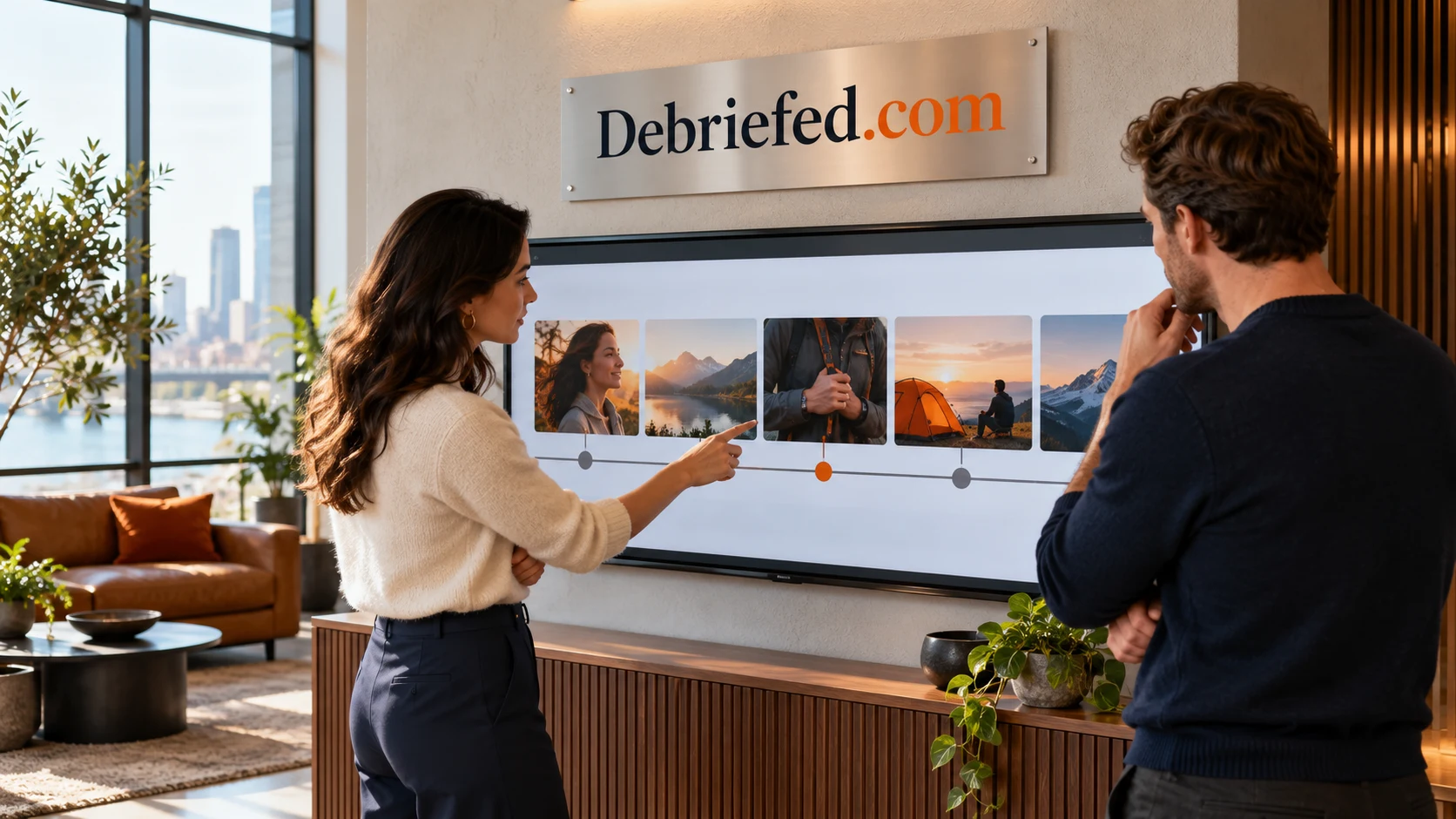
Debriefed.com suits a founder building the place teams turn to once the work is done: review software that ties a release review to its follow-up tasks, a facilitation practice that runs fair sessions for project sponsors, a lessons archive for a project office or a debrief service for field crews. That company will be compared with review platforms that have years of enterprise accounts, with consulting firms that have long client lists, and with a crowd of newer tools named from the same few words about retros and insight. One plain word lets a new company take its place in that line on day one.
Debriefed is the past tense of debrief, the word pilots, emergency crews, clinical simulation teams and project offices use for the conversation after a mission, a shift or a launch. It has two syllables, it is spelled the way it is said, and it is finished in its grammar: the event happened, the people involved compared accounts, and the lesson is on record. A word this plain invites the question of what it gives back. A plain word earns its place in the explaining it saves: every session invitation, report heading and link to a past review says what the work is before anyone describes the method. Debriefed.com does that from the first review a founder runs under it.
In review work, the first impression is usually written. A sponsor forwards an invitation, a participant opens a report, a learning lead pastes a link into next quarter's plan, and the name is read before the method is. That reading counts for more now that the tools are easier to make: a small team using AI can put together a review workflow or a summary feature in weeks, and the next team can match it just as fast. A name that says exactly what the company does is one of the few things a competitor cannot rebuild, and Debriefed.com gives the founder that piece from the start.
The usual plan is to launch on whatever name is free and upgrade once the business has made it. By then the first name is on the report templates, the invitation emails, the facilitator's slides and the links inside every past review, so changing it means changing all of them and retiring the name clients already use. The better name also has to still be available when the founder finally asks for it. Starting on Debriefed.com means the name on the first invitation is the name on the hundredth.
The price is for the Debriefed.com domain name; no business, products, customers or site assets are included. Every purchase comes with an optional personalized roadmap for launching or rebranding on the name, as a service added to the sale. Payment plans and other structures are open to discussion.
The name is a head start, not the business: the method, the fairness in the room and the follow-through are still the founder's work. With Debriefed.com, that work begins under a name that already says what the sessions are for. A premium .com is a trust shortcut.
Who builds on it
Three kinds of founder fit the name, all aiming to be the company a team calls after the launch, the incident or the project close.

A review tool whose name says what it is for in every notification it sends.
A practice you can introduce in one word to a sponsor, a team and the people who join later.
A home for findings that the next project can search before it plans.
Ideas
A project office, a product team, a project sponsor and a field crew: one first customer for each.

One name over every lesson your teams have recorded, so the next project starts with the last one's findings.
Explore the idea
Your product's name on the screen where a team's review turns into changes with owners and dates.
Explore the idea
A practice name you can put on the session invitation and the final report, and stand behind both.
Explore the idea
A desk name that sits comfortably on a consent form, an interview schedule and the record the client receives.
Explore the ideaResources
Practical reading for the meeting and the work that follows.

Different review formats answer different questions. Compare the purpose, timing and participants of an after-action review, debrief, hotwash and postmortem, then choose the format that fits the decision ahead.
Read the guide
The review is a discussion; the report is the record people use afterward. Learn how to separate observations from conclusions and turn agreed findings into actions with owners and dates.
Read the guide
Prepare a focused review around four practical questions. This guide covers the timing, participants and facilitator, with an agenda that helps the team compare expectations with what actually happened.
Read the guide
A lesson needs enough context for another team to find and apply it. Learn how source evidence, useful metadata, access permissions and ongoing ownership keep a record relevant after the project ends.
Read the guideThe first review
Describe the team, product or practice you have in mind and ask about acquiring the name.