
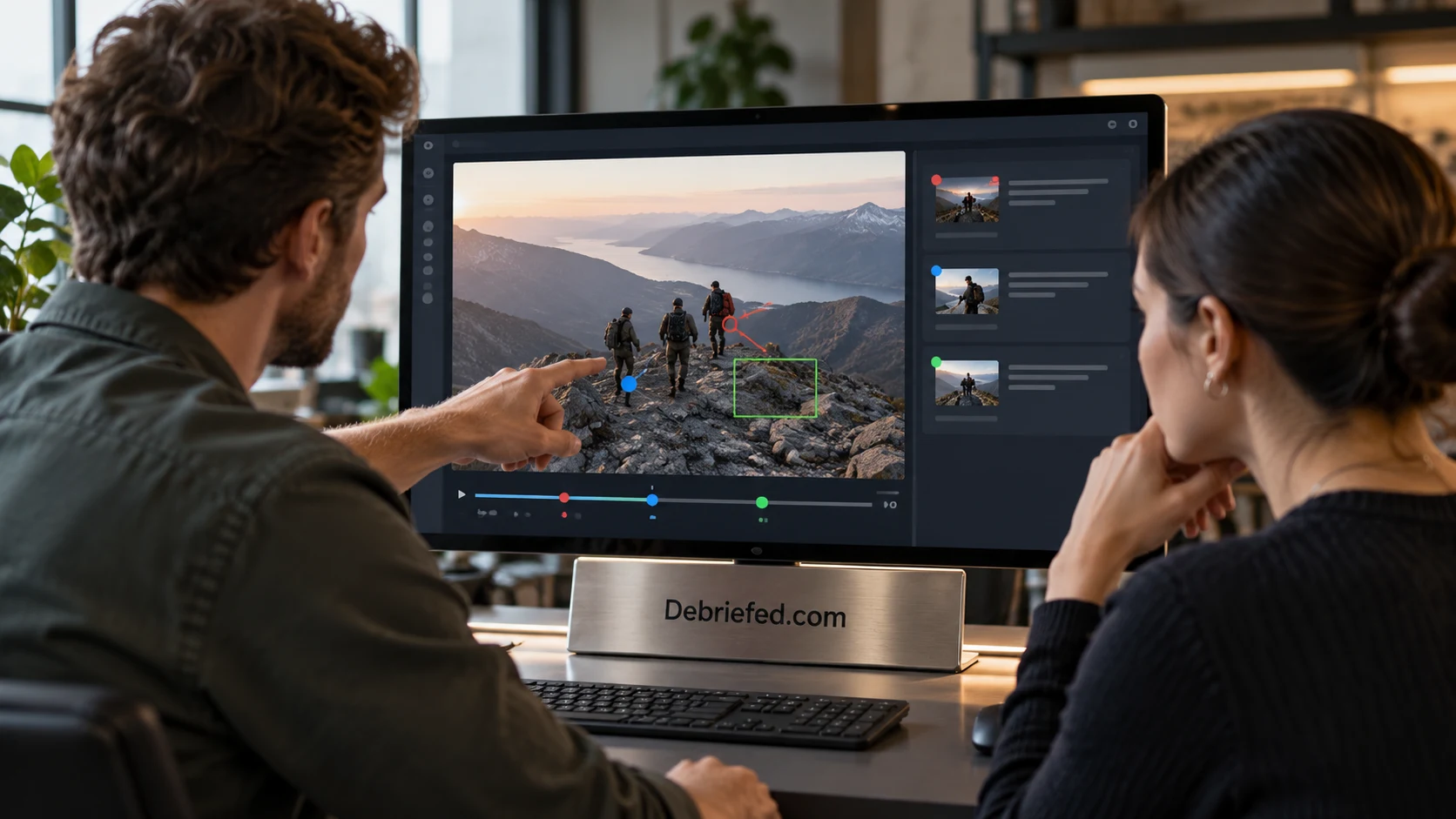
I would build an after-action product around the moment when a team needs to turn fresh experience into a better next attempt. The product would begin after a launch, incident, campaign, or project milestone, while observations are still specific. It would give the group a calm structure for comparing the intended result with the actual result and for carrying the strongest lessons into assigned work.
Choose a recurring event
A product team would first choose one recurring event to support well. A software release is a useful starting point: it has a planned scope, deployment time, support tickets, monitoring data and a named owner. The review could bring those records into a single timeline before the meeting. People would spend their session explaining what the sequence means instead of hunting through five different tools for the sequence itself.
Separate observation from interpretation
The interface should separate three kinds of entry: an observation, an interpretation and a proposed change. A participant might observe that an alert arrived after customer complaints, infer that the threshold was too high, and propose a lower threshold. Those statements belong together, but they are not equivalent. Keeping their types visible lets another participant challenge the inference while accepting the original observation. That distinction gives the discussion somewhere useful to go.
I would organize the live session around a short sequence rather than an open text box. Participants would first write independently, then compare accounts, then explore causes, and finally commit to changes. Independent input reduces anchoring. A visible sequence keeps diagnosis from being rushed by the understandable desire to start fixing things. Compare the proposed sequence with Asana’s project retrospective overview while drafting the first session template.
Keep source records visible
An import should retain a link to the source rather than turn every message into an unquestioned fact. Ticket status can change, timestamps can use different zones, and a chat excerpt can lose its context. The product needs a way to annotate uncertainty and correct an imported item. A simple source drawer would be more useful than a confident automated summary whose evidence nobody can inspect. AI could suggest a timeline while people verify the entries.
The record should connect every accepted lesson to its source event, supporting evidence, decision, owner, and review date. It should also preserve successful choices worth repeating. Teams often document only failures and lose the conditions that made good work possible. A balanced record gives future teams a more useful starting point.
Make access rules part of the product
Permissions would follow the review, not just the workspace. A launch debrief might be open to the whole product group, while a personnel-sensitive incident requires a smaller audience. A record owner should be able to distinguish participant notes from the approved account. Export and deletion need clear behavior as well. A buyer evaluating this product would reasonably ask what remains accessible after a contractor leaves and what a shared link exposes.
Test a team subscription
The first pricing experiment could be a paid workspace for teams with frequent releases. Interviews should establish who owns the budget and what existing tool would lose work when the product arrives. A per-review charge might discourage the very routine that creates value. A workspace subscription could be easier to understand, but only if the team can see enough useful reviews each month to justify another recurring line item.
Follow the action into normal work
A pilot should follow a complete loop: prepare one review, run it, assign a change, and check that change during the next release. Watching only the meeting would miss the difficult handoff into normal work. If an action must be retyped into a ticket system, the integration needs to preserve an accountable owner and a source link. Completion should return to the review record so the original finding does not become an abandoned document.
Explain the first customer clearly
Debriefed.com could suit this focused workflow because it describes a completed review in ordinary language. The product would still need a narrower promise on its homepage, such as helping release teams carry lessons into the next deployment. A name can support recognition across a wider market later; the first product needs a specific customer and repeatable task now. Broad positioning would make early customer interviews less useful.
Measure the complete review loop
Useful pilot measures include time spent preparing the timeline, the proportion of actions with an owner, and the number checked before the next event. These are proposed measures, not claims about results. Teams should also record when an automated suggestion was wrong or when the template missed an important question. Those failures reveal whether the product is improving review work or simply making a polished record of it.
A workflow product would need to prove its value through ordinary, repeated use. For this idea, the useful test is whether the next review becomes easier because the previous one left a clear record, an assigned change and evidence that the change was checked.
Customer outreach could start in developer communities where release managers and engineering leads discuss deployment work, using a useful sample review template rather than a broad product pitch. A small set of direct invitations could offer a paid pilot around one upcoming release, with the scope and fee stated before any records are shared. The demonstration should show an agreed action returning to the next release checklist, so a prospective customer can assess the handoff.